
By: Frank Joseph Rowe
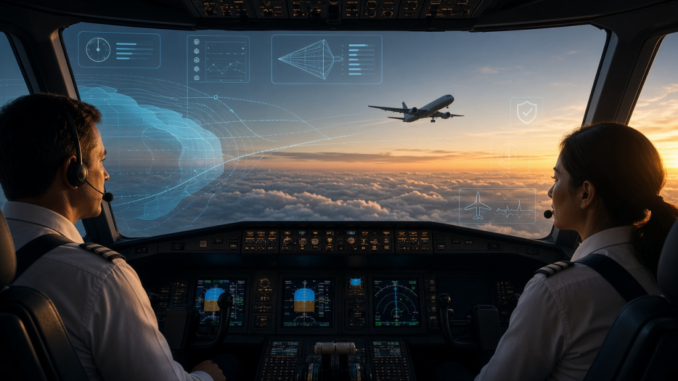
Wichita, Kansas, has long held the proud title of the “Air Capital of the World.” From the early days of Beechcraft, Cessna, and Stearman to the modern aerospace ecosystems of Textron Aviation, Bombardier, and The Boeing Company, the city’s identity is deeply rooted in aviation manufacturing. Today, a new technological horizon is emerging: artificial intelligence. As AI promises to revolutionize everything from aerodynamic modeling to supply chain predictive analytics, Wichita’s General Aviation (GA) sector faces a critical challenge. The industry must achieve an equitable blend of advanced AI technology balanced by robust strategy and rigorous oversight-ensuring that the drive for efficiency does not dismantle, but rather transform the skilled human workforce that built the industry.
The Equitable Blend: Integrating Tech, Strategy, and Oversight
Implementing AI in aviation manufacturing cannot simply be a race toward automation. Because flight safety is paramount, AI integration requires a tripartite strategy involving manufacturers, third-party auditing bodies, and regulators like the Federal Aviation Administration (FAA).
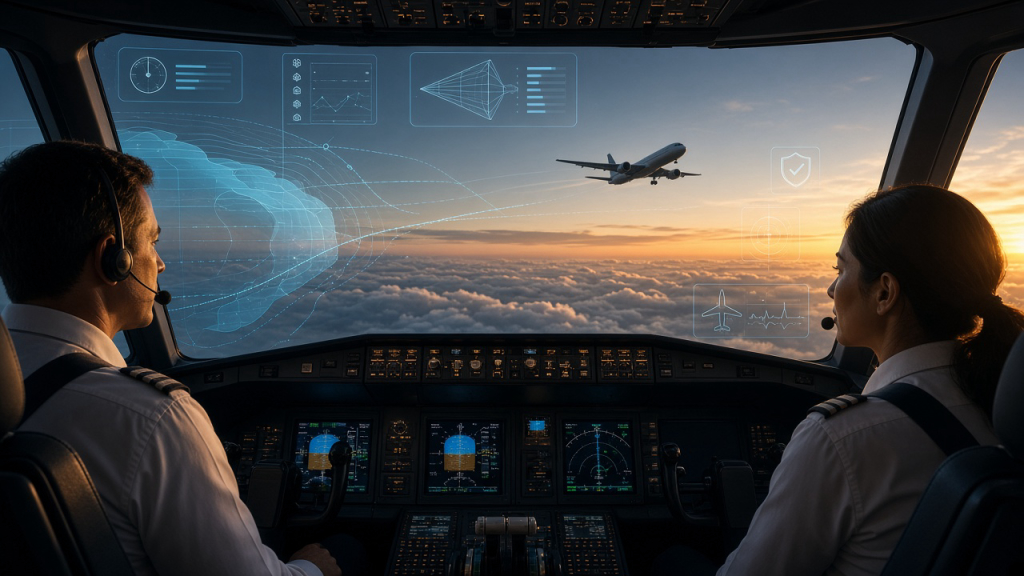
When deployed effectively, AI acts as a cognitive multiplier rather than wholesale human replacement. In the design phase, generative AI can optimize component geometry for weight reduction, while human engineers evaluate the structural viability and regulatory compliance of those designs. On the factory floor, predictive maintenance algorithms can scan machinery or non-destructive inspection (NDI) data to catch micro-fissures in composite materials long before they are visible to the naked eye.
This balance relies on a clear-eyed division of labor that leverages the unique competencies of both machine and human. AI thrives in the domain of quantitative scale-processing massive datasets at unprecedented speeds, isolating subtle anomalies, and executing highly repetitive tasks with flawless precision. Yet, it lacks the qualitative foundation inherent to human workers. Human employees supply the irreplaceable cultural and cognitive core of the operation: seasoned intuition, ethical reasoning, abstract problem-solving, and contextual adaptability. While the algorithm calculates the data, the human workforce interprets its broader meaning, ensuring that safe, practical wisdom governs the shop floor.
Within the demanding spheres of aerospace engineering and program management, this distinction becomes even sharper. AI acts as an analytical engine, rapidly executing complex simulations, optimizing structural stress variables, and flagging supply chain bottlenecks days before they disrupt production. However, raw data cannot steer an aerospace program. Human engineers and program managers provide the vital leadership necessary to interpret ambiguous data, manage complex stakeholder relationships, and navigate fluid FAA regulatory landscapes. AI can map the theoretical limits of resource allocation and design iterations, but human agency is required to translate those mathematical outputs into airworthy realities.
To maintain equity, this technological push must be dictated by a “Human-Centered Automation Strategy.” This strategy suggests that AI should be matched to repetitive, high-danger, or dataoverload tasks, leaving complex assembly, nuanced quality assurance, and final flight-ready sign-offs to human experts.
Confronting the Psychological Cost: Fear and Gradual Disempowerment
The introduction of advanced automation naturally sparks a deep-seated fear of job loss among the workforce. In Wichita, where generations of families have worked the assembly lines, this anxiety is both economic and cultural. However, an even more insidious risk exists alongside immediate displacement: Gradual Disempowerment.
Gradual disempowerment occurs when workers are not just laid off, but rather their roles are slowly eroded of meaning, skill, and autonomy. When an AI system takes over the primary cognitive loadsuch as diagnosing a mechanical fault or planning a manufacturing sequence-the human operator could transition from an active technician to a passive monitor. Over time, this passivity leads to skill decay, a loss of situational awareness, and a diminished sense of professional pride. If the AI fails or encounters an edge-case scenario, the disempowered human worker may no longer possess the sharp, hands-on intuition required to step in and correct the error, posing a significant risk to manufacturing quality and aviation safety.
How an Oversight Entity Formulates the Solution
An oversight entity could within reason help ensure job equity and security in the Wichita aerospace sector by establishing proactive regulatory frameworks, mandatory upskilling programs, and transparent AI deployment audits.
This could be further leveraged by promoting a “human-first” framework that mandates fair training, safety checks, and union collaboration.
For engineers and program managers, this would involve requiring human eyes to sign off on all AI-generated designs and scheduling decisions to prevent errors and algorithmic bias.
For factory-floor assemblers, the entity must ensure AI tools assist with physical labor rather than replace human hands, while mandating companies to retrain current staff for new tech roles before any automation takes place.
Conclusion
AI represents an inevitable and powerful tool for Wichita’s General Aviation manufacturers to maintain a global competitive edge. However, the true measure of innovation lies in stewardship. By treating the human workforce as an irreplaceable asset and empowering an oversight entity to actively combat gradual disempowerment, Wichita can pioneer a manufacturing model that is both technologically brilliant and profoundly human. Through structured strategy, process guardrails and balanced oversight, the Air Capital of the World can ensure that its workforce continues to fly high alongside the machines they build.